

Stress Intelligence is the organisational capability to sense, understand and respond to workforce stress before it becomes a larger performance and wellbeing problem.
It is not a single tool or assessment. It is a structured approach to understanding what is happening across a workforce — by role, by team, by context — and connecting that understanding to appropriate action.
The Viyoga framework:


Most organisations use tools that provide valuable information — but often after the fact. Traditional Signal What It Tells You Limitation
Sentiment and satisfaction Often periodic — typically annual or quarterly
Absence patterns An outcome of a problem, not an early signal
Why people left After the decision has already been made
Visible behavioural change Can miss hidden or early-stage stress

This is where the detailed framework belongs.

Identify relevant stress signals through appropriate assessment, employee inputs and, where relevant, additional data sources. This may include structured self-assessments, role-specific stress indicators and pulse-style inputs depending on programme design.

Identify patterns, drivers and differences across roles, teams and workforce groups. Go beyond knowing that stress exists to understanding why it exists — workload, emotional labour, leadership dynamics, organisational change, role-specific pressure.

Connect insights to appropriate, evidence-informed interventions. These may include yoga, breathwork, mindfulness, recovery practices, sleep support and lifestyle guidance — matched to the needs identified, not delivered as a standard package.

Identify patterns, drivers and differences across roles, teams and workforce groups. Go beyond knowing that stress exists to understanding why it exists — workload, emotional labour, leadership dynamics, organisational change, role-specific pressure.
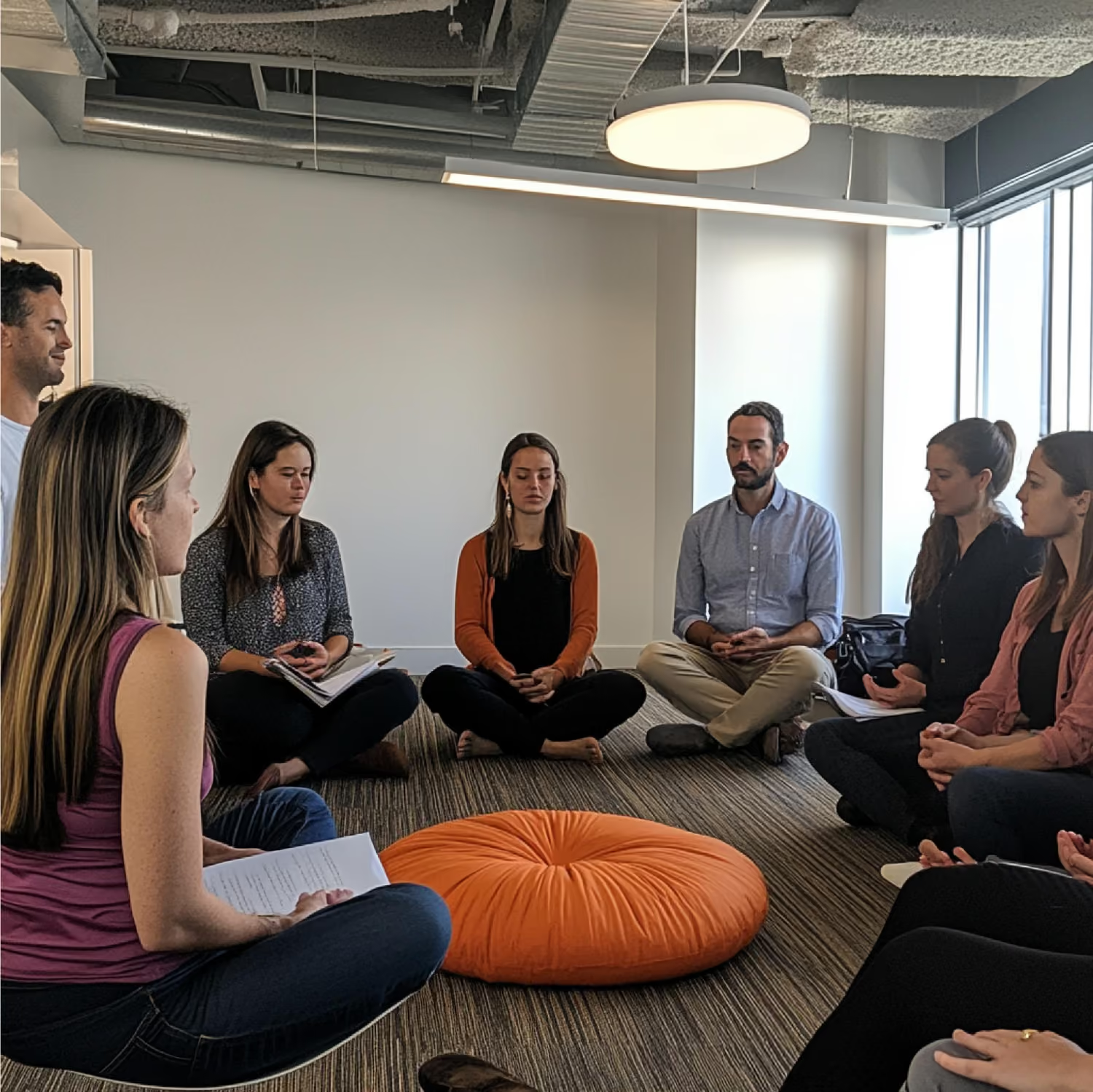
Workplace stress can involve multiple dimensions simultaneously. Depending on the programme, Viyoga can consider a range of workforce wellbeing and stress factors:
• Physical wellbeing and energy
• Mental load and cognitive demand
• Emotional wellbeing
• Sleep and recovery
• Focus and concentration
• Role-specific pressures
• Lifestyle and recovery behaviours
• Organisational context and culture
The same organisation can have very different stress profiles across its workforce. A Relationship Manager facing client pressure, a Healthcare Professional managing emotional labour and a Technology team under delivery pressure all require different responses. Generic programmes miss this.






Enterprise-grade data governance built into every layer of the platform.
HR never sees individual biometrics — only aggregated, role-level insights.
Every intervention is validated by peer-reviewed HRV and stress-reduction research.
Viyoga is built on three evidence-based pillars:
Heart Rate Variability is the most clinically validated non-invasive measure of stress and recovery. Viyoga uses HRV data to detect stress states in real time — the same methodology used in elite sports performance and clinical research.
Correlating physiological data with calendar and work context transforms raw biometrics into actionable intelligence. This is what separates Viyoga from a fitness tracker.
Short-duration yoga and breathwork interventions have strong evidence for acute stress reduction. Viyoga's micro-intervention library is designed for the workplace — no mat required, no session longer than 3 minutes.
Identify high-stress individuals and teams before they reach breaking point. Early intervention reduces chronic stress accumulation — the primary driver of burnout.
Stress is the leading cause of workplace absence in most industries. Organisations running Viyoga pilots track a measurable reduction in stress-related sick days within the first quarter.
Employees who feel genuinely supported — with evidence-based, personalised care rather than generic perks — stay longer. Viyoga gives you the data to prove your wellbeing investment is working.
Stop funding programmes that don't move the needle. Viyoga's ROI dashboard shows exactly which interventions are reducing stress scores — so you can double down on what works.
The value of Stress Intelligence is not simply a wellbeing outcome. It is a decision-making capability.
Earlier and better workforce insight helps leaders:

Identify emerging pressure points before they become visible problems

Target interventions more effectively, rather than applying the same programme to every employee

Understand programme participation and response across different workforce groups
Prioritise wellbeing investment based on actual need
Track progress against agreed objectives and demonstrate programme value over time
“Wellbeing is no longer a 'nice to have'; it is tied to productivity, absenteeism, and retention outcomes that leadership teams can quantify.” — Zawya, 2025

Stress Intelligence provides the framework. Workplace Reset provides a structured way to put that framework into practice — helping organisations begin with assessment, move through targeted interventions, and build the habits and data needed for an ongoing wellbeing strategy.