
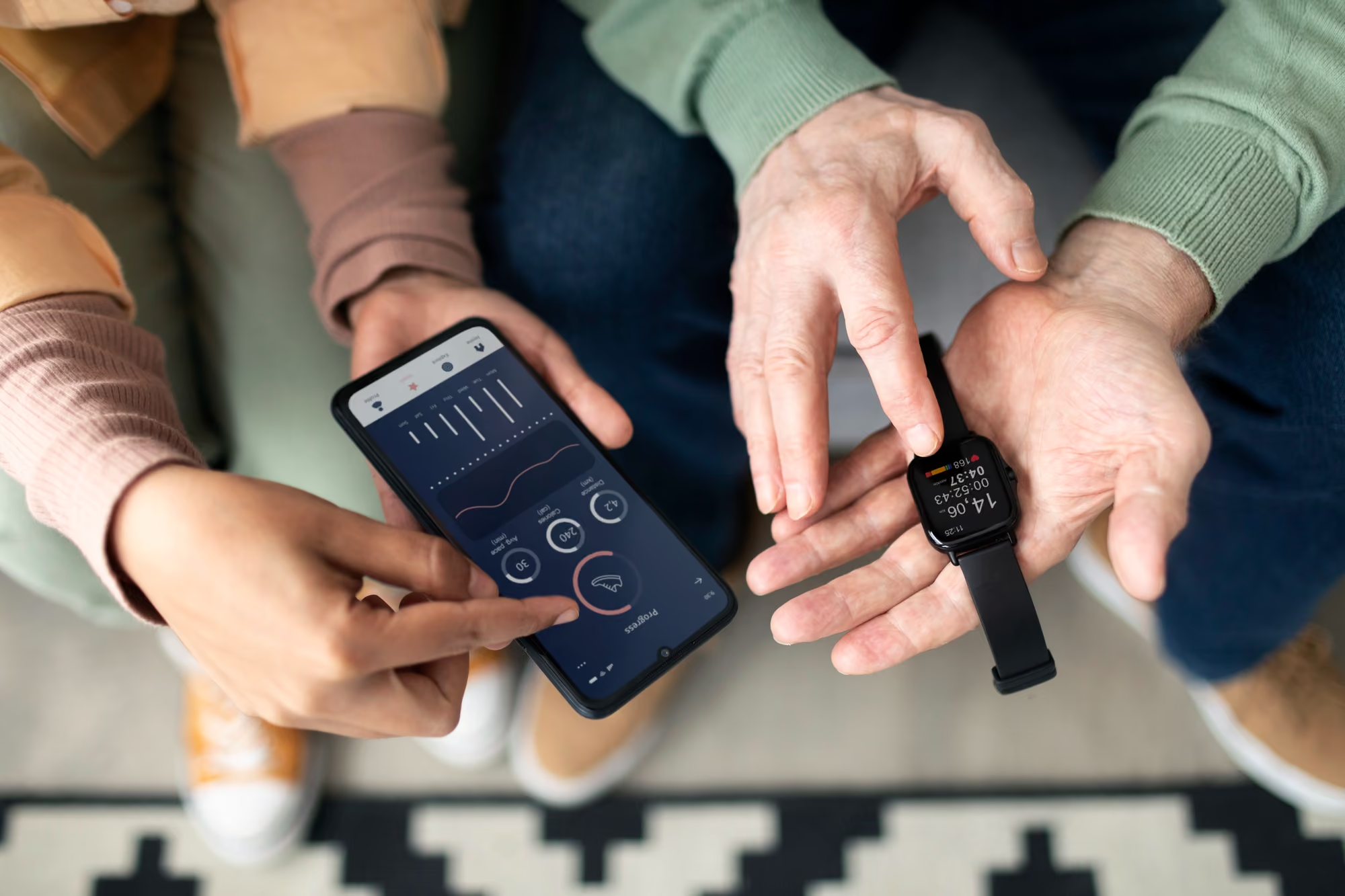

What Makes Viyoga Different: Biometric Intelligence vs Generic Wellness
Viyoga
Viyoga
Stress Intelligence & Workforce Wellbeing
Author:
Manju Panwar
Location:
Dubai, UAE
Date:
October 6, 2026
Category:
Stress Intelligence

Corporate wellness spending is rising across the region. The UAE market alone is projected to grow from USD 0.19 billion in 2026 to USD 0.24 billion by 2031, and 88% of UAE companies plan to increase investment in employee wellbeing over the next year. Yet for many organisations, that spending is not translating into measurable reductions in burnout, absenteeism, or disengagement.

The problem is not wellness itself. It is the model most companies are still using.

The real question is not whether to invest in corporate wellness, but whether the model is measurable enough to justify the spend.

Most programmes are built around attendance, not outcomes. They offer sessions, track headcounts, and call it a strategy. What they rarely do is identify stress patterns, personalise interventions, or prove that anything has changed.

Three things this article will cover:

Why Most Corporate Wellness Programmes Underperform

Ask most HR leaders what their wellness programme measures, and the answer is usually participation rates. How many people attended the session. How many downloaded the app. How many completed the survey.

These are activity metrics. They tell you the programme is being offered. They do not tell you whether stress levels are falling, whether recovery is improving, or whether burnout risk is declining.

The structural problem is that most corporate wellness programmes are designed around delivery, not diagnosis. They are built to provide access to sessions, not to understand the workforce they are serving. A mindfulness class on a Tuesday afternoon may be genuinely useful for some employees, but if it is the same class for the finance team under quarter-end pressure and the operations team managing shift fatigue, it is not a strategy. It is a calendar entry.

Generic vs measurable: what the difference looks like in practice

DimensionGeneric ProgrammeMeasurable Programme
Starting pointSession scheduleBaseline biometric and behavioural data
PersonalisationSame content for allInterventions matched to individual stress profiles
Progress trackingAttendance and satisfaction scoresHRV trends, recovery markers, absenteeism rates
Reporting to leadershipParticipation numbersBusiness-relevant outcomes: productivity, retention, cost
Feedback loopAnnual surveyContinuous monitoring and adaptive adjustment
AccountabilityLow — activity is the outputHigh — outcomes are the output

The result of the generic model is predictable: senior leaders report that even well-intentioned programmes often fail to shift the metrics that matter. Engagement rises briefly after launch, then plateaus. Absenteeism and presenteeism continue unchanged. And leadership quietly starts questioning whether the budget is justified.

What Biometric Intelligence Changes

Biometric intelligence does not replace the human side of wellness. It provides the diagnostic layer that generic programmes are missing, so that interventions can be targeted rather than generic, and outcomes can be tracked rather than assumed.

The core signal is heart rate variability (HRV): the variation in time between heartbeats, which reflects the balance between the sympathetic (stress) and parasympathetic (recovery) nervous systems. HRV is one of the most reliable non-invasive indicators of physiological stress load, recovery quality, and resilience capacity. It is invisible to self-reporting but readable through continuous monitoring.

“Biometric intelligence functions as a continuous feedback loop on workforce stress, recovery, and engagement.” — Global Wellness Institute

Here is how the model works in practice:

As Corporate Wellness Magazine notes, biometric-based programmes “use physiological data to drive decisions and feedback, transforming subjective self-reports into data-driven health risk insights.” That shift from subjective to objective is what makes measurement credible.

The Business Case: From Feel-Good Perk to Measurable System

The cost of poor workforce wellbeing is not abstract. The CDC and Integrated Benefits Institute estimate that absenteeism-linked productivity losses cost US employers USD 225.8 billion annually. Improving employee health can reduce lost productivity by up to 27%. These are operational numbers, not wellness metrics.

The business case for a biometric-led model rests on two arguments: the cost of inaction is already priced into your organisation, and personalised programmes produce stronger returns than generic ones because interventions are targeted rather than broadcast.

The key phrase in all of this is “well-designed.” Generic programmes that lack personalisation, baseline data, and outcome tracking consistently underperform against these benchmarks. The ROI materialises when the programme can identify who needs what, deliver it, and demonstrate that something changed.

What leadership teams can expect from a measurable wellness system:

The shift from activity-based to outcomes-based wellness is not just a philosophical upgrade. It is the difference between a cost centre and a business system.

Why This Matters Now in the UAE

The UAE is not a laggard market for corporate wellness. It is an accelerating one. According to Bupa Global's 2025 survey, 93% of UAE employers now view wellbeing as a core part of business strategy, and 88% plan to increase their investment over the next year. The market is projected to grow at a 5–5.6% CAGR through 2031.

That growth, however, does not automatically mean better outcomes. It means more organisations will spend more money on wellness. Whether that spending is measurable or not is a separate question.

The UAE context that makes biometric intelligence particularly relevant:

The window for differentiation is open. The question is whether organisations in the UAE use the current wave of wellness investment to build something measurable, or simply to add another perk to the benefits package.

The Sensible Objection: What About Privacy, Trust, and Overreach?

Any serious conversation about biometric monitoring in the workplace has to address the obvious concern: who owns the data, how is it used, and where does measurement end and surveillance begin?

These are legitimate questions, and dismissing them is the fastest way to lose employee trust before a programme has a chance to work.

“Ethical data use, privacy safeguards, and evidence-based design are critical conditions for success in corporate wellness programmes.” — Expert consensus across workplace wellness research, 2026

What responsible biometric wellness looks like:

Biometric intelligence only delivers its potential when employees trust the system. Programmes that treat privacy as a compliance checkbox rather than a design principle will encounter resistance that undermines even the best analytics. The ethical framework is not a constraint on the model. It is a prerequisite for it.

What Makes Viyoga Different in Practical Terms

Most corporate wellness providers in the UAE operate in one of two modes: they deliver yoga and mindfulness sessions as a service, or they offer digital wellbeing platforms built around content libraries and mood check-ins. Both have value. Neither is a diagnostic system.

Viyoga is built differently. It combines HRV-based biometric monitoring, behavioural analytics, and guided interventions into a single model designed specifically to identify workplace stress triggers, not just deliver wellness content.

From feature to outcome: how Viyoga's model maps to business results

Viyoga CapabilityWhat It DoesBusiness Outcome
HRV and biometric monitoringTracks physiological stress and recovery in real timeIdentifies burnout risk before it becomes absenteeism
Behavioural analyticsMaps stress patterns to roles, schedules, and workloadEnables team-level and individual-level personalisation
Personalised interventionsMatches yoga, breathwork, and lifestyle guidance to each profileHigher engagement and sustained behaviour change
Baseline and follow-up measurementTracks change against starting pointProduces outcome data leadership can act on
Pilot-ready structureDesigned to run for a single team or department firstAllows ROI validation before full-scale rollout

This makes Viyoga better suited to organisations that need to justify wellness investment with data, not just with intention. The model is built for accountability from the start, which is why a focused pilot is the most practical entry point.

If It Cannot Measure Change, It Cannot Claim Impact

Generic wellness programmes are not useless. But they are structurally limited. Without baseline data, personalisation, and outcome tracking, they generate activity rather than change. For organisations where productivity, retention, and burnout risk are live concerns, that is not a sustainable investment model.

Biometric intelligence does not make wellness harder. It makes it accountable. It gives leaders a defensible answer to the question every finance committee eventually asks: what did we actually get for that spend?

The most practical next step is not a company-wide rollout. It is a focused pilot for one team or department, where outcomes can be measured, validated, and used to inform the broader decision.

If your organisation is ready to move from wellness as a perk to wellness as a measurable business system, a pilot is where that proof is built.

Request a pilot programme for your team at viyoga.me


Request a pilot programme for your team at viyoga.me
Button arrow iconButton arrow icon


Frequently Asked Questions

Is biometric monitoring a diagnosis of employee stress?

No. Biometric data can add a physiological signal, but it should be interpreted alongside employee-reported information and organisational context. It is not a standalone diagnosis of psychological stress.

How should privacy and data ownership be handled?

Employees should understand what is being collected, why it is being collected and how it will be used. Participation should be informed and appropriate, individual data should remain confidential, and organisational reporting should protect employee privacy.

More Insights from Viyoga